



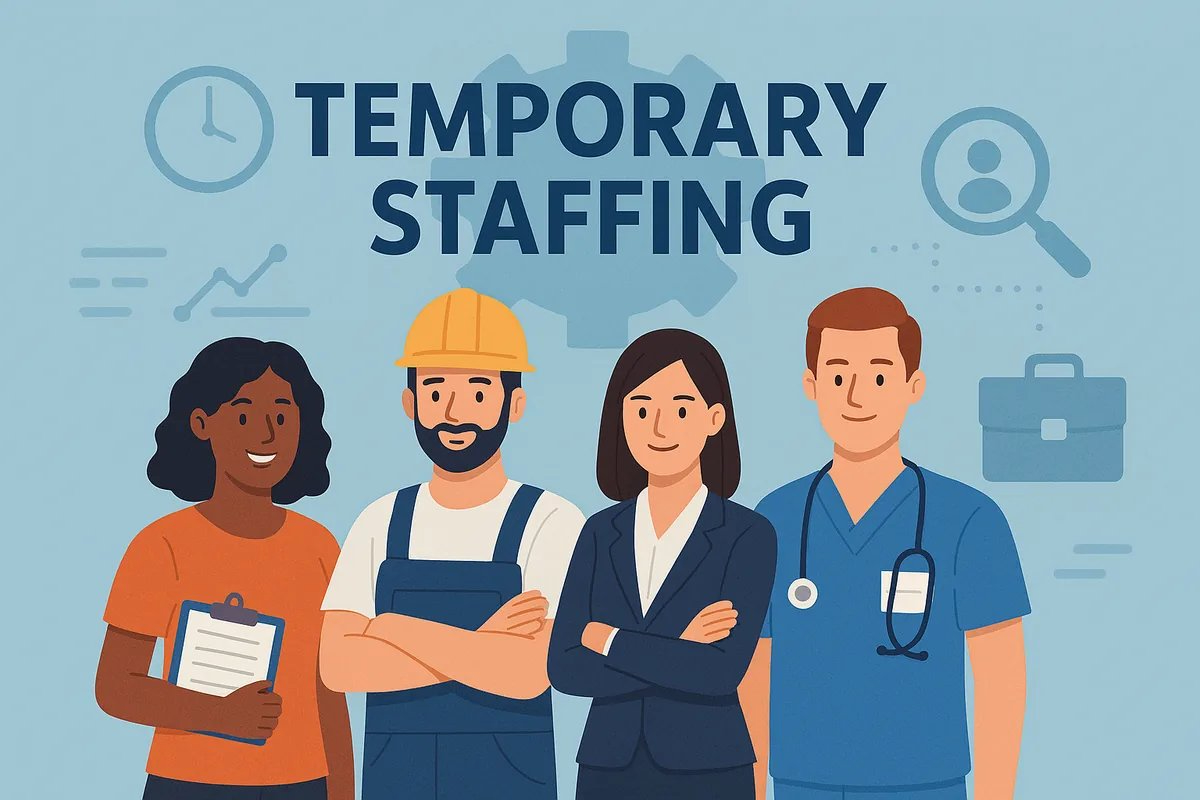
Temporary work has quietly become one of the most useful tools in the hiring world because companies need to move fast, and people want flexibility, experience, or a foot in the door somewhere new. But "temp work" means different things depending on which side of the table you're sitting on. Here's what it actually looks like for both employers and candidates, and how to get the most out of it.
A temporary employee is someone brought on for a defined, limited stretch of time rather than an open-ended role. Some temp jobs run just a few days; others stretch to several months. In most cases, the arrangement is capped well under a year, and it's built around a specific need — not a permanent seat on the org chart. (For a deeper look at the legal traits that typically define these roles, Indeed's guide to temporary employment is a solid reference.)
Temp roles typically fall into a few buckets:
It's worth distinguishing temp employees from other types of independent talent. Freelancers are self-employed and typically juggle multiple clients on their own schedule. Independent contractors often take on longer, more specialized engagements and may run their own practice or crew. Temp employees, by contrast, are usually employed by the staffing agency itself and placed with one client at a time.
For a business, the appeal of temp staffing comes down to speed and flexibility:
That said, temp staffing isn't without trade-offs. A temp worker may need onboarding time before they're fully productive, might not carry the same institutional knowledge as a longtime employee, and — especially on short assignments — may feel less invested in team culture than someone in a permanent role. None of these are dealbreakers, but they're worth planning around.
On the other side of the placement, temp work offers something a lot of job seekers value: speed and optionality.
If you're hoping a temp role turns permanent, say so. Recruiters can't read minds — telling your agency contact that you're interested in a long-term placement helps them steer the right opportunities your way. And once you're on assignment, the basics matter more than ever: show up on time, communicate clearly with your recruiter, and treat the short-term role like it's an audition — because in a lot of cases, it is.
Whether you're an employer or a job seeker, the same qualities separate a good staffing partner from a mediocre one:
Temporary staffing isn't a stopgap or a lesser form of hiring — done well, it's a genuinely strategic tool. For employers, it's a way to move fast and hire smart. For job seekers, it's often the quickest and lowest-risk path to a role that fits.
Read our latest blog posts to increase your chances of being the perfect candidate.

How to Work With a Staffing Agency (like Perfect Timing): A Guide for Job Seekers
.png)
Before trusting a recruiting firm with your career or your hiring, vet it against eight clear signs of legitimacy. These include never charging candidates and maintaining a verifiable, compliant presence to specializing in your field and treating you with genuine professionalism.

If you are searching for a staffing agency in the San Francisco Bay Area, you will find no shortage of options ranging from global staffing giants to boutique local firms. The Bay Area job market spans wildly different communities: San Francisco, Oakland, Palo Alto, San Jose, Silicon Valley, the East Bay, and the North Bay including Marin County and Sonoma County. Each submarket has its own hiring culture, salary norms, and employer base.

This guide outlines how temporary staffing enables business agility, cost efficiency, and access to specialized skills. It explains when to use temp staff, common staffing arrangements, a step-by-step hiring process, and how to choose agencies while staying compliant with legal requirements. It also covers onboarding, integration, performance evaluation, temp-to-perm transitions, technology tools, and ways to overcome common challenges. Applying these best practices helps build a flexible workforce that supports continuity and long-term success.

Thinking of hiring help for your California business? Bringing on an “independent contractor” instead of an employee can seem like a smart way to save money and reduce paperwork. But in California, the line between the two is thinner—and stricter—than you might think. Getting it wrong is a costly mistake that can put your entire business at risk.
California's AB5/ABC test makes 1099 classification for core business functions highly risky, shifting the focus from short-term savings to compliance and total liability. Misclassification can drive severe financial penalties, constrain operational control, and damage brand reputation. Engaging W-2 temporary employees through a reputable staffing agency transfers employer-of-record burdens, preserves flexibility with lawful oversight, and mitigates legal and financial exposure. Compliance-forward W-2 staffing becomes a strategic lever for resilient, scalable growth in California.

Hiring a temporary accountant can be a strategic decision for businesses seeking flexibility and expertise without the long-term commitment of a full-time hire. In today's dynamic economic landscape, the demand for temporary accounting staff is surging, driven by the need for specialized skills, cost efficiency, and adaptability to fluctuating workloads. This comprehensive guide will navigate you through the intricacies of hiring a temp accountant, elucidating the benefits, considerations, and steps involved in this process.

The San Francisco Bay Area's diverse, high-demand job market makes staffing agencies key connectors between employers and qualified candidates across tech, healthcare, finance, and creative fields. Agencies offer temporary, contract, and permanent placements, plus specialized services like IT and executive search. Their market expertise, networks, and guidance streamline hiring for employers and expand opportunities for job seekers.

In today's fast-paced business environment, maximizing efficiency is key to staying competitive. One of the most effective strategies for achieving this is utilizing temp staffing solutions.

Lorem ipsum dolor sit amet, consectetur adipiscing elit. Suspendisse varius enim in eros elementum tristique.